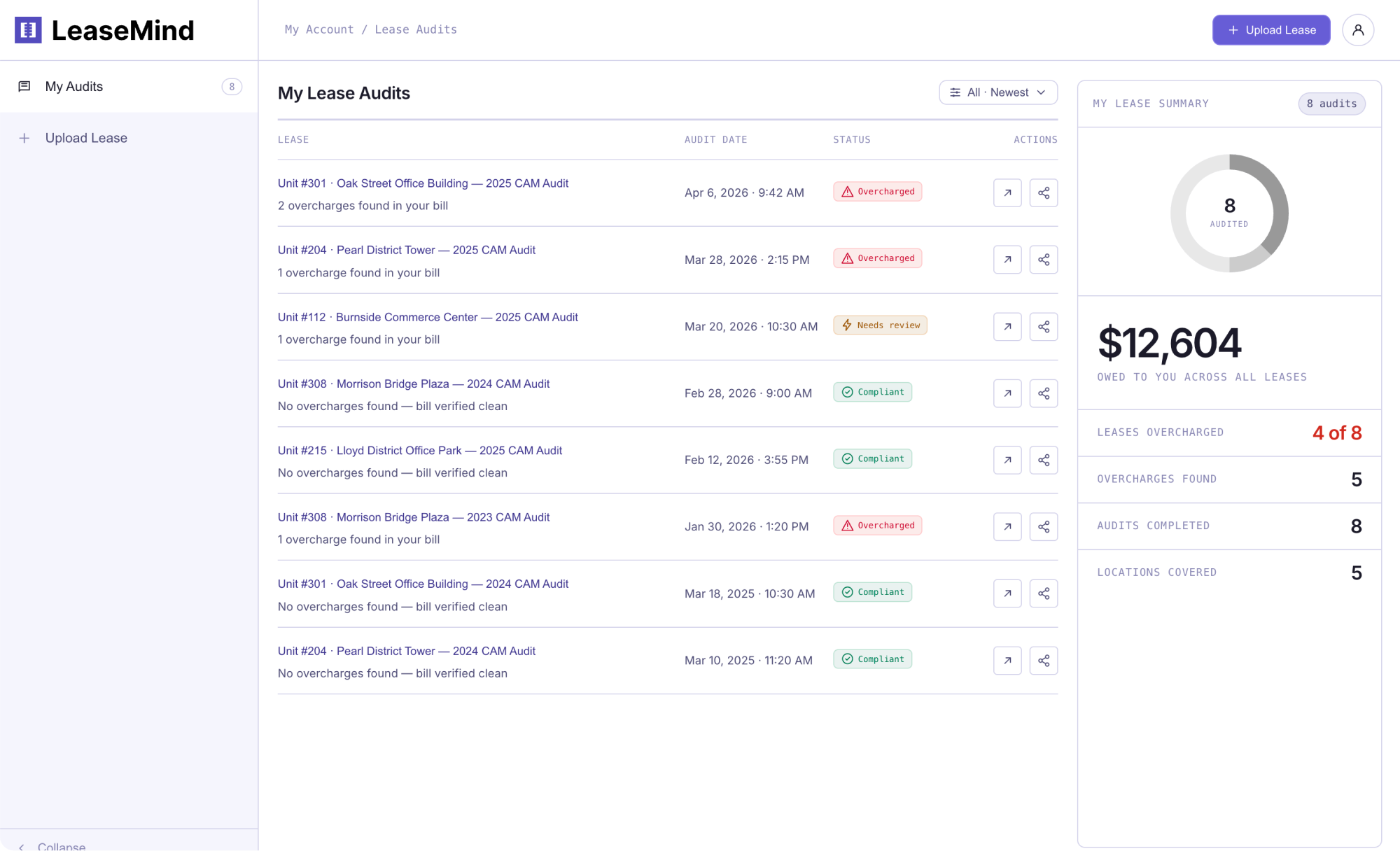
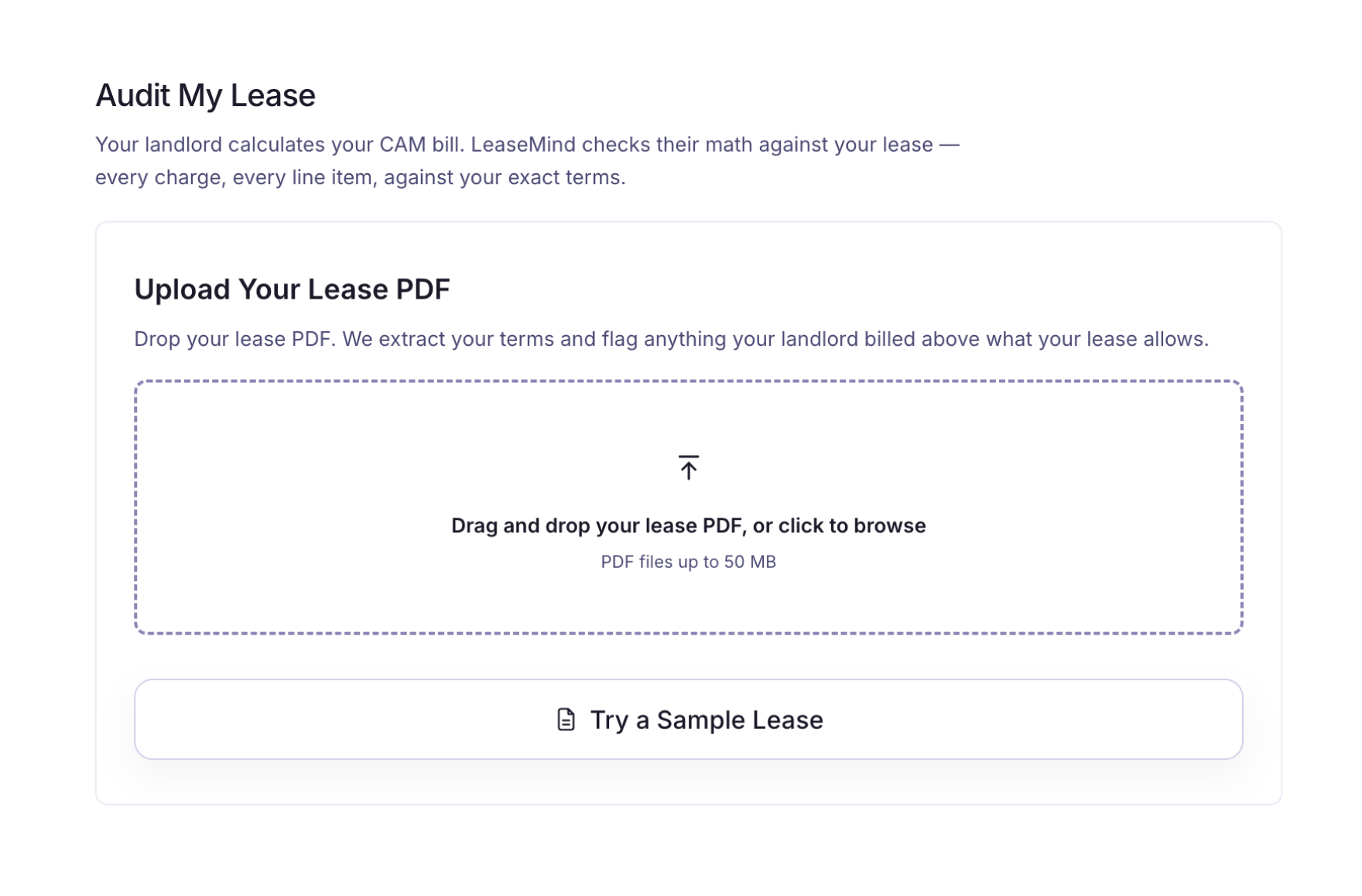
Lease extraction
Commercial lease PDFs are uploaded and converted to structured data. LeaseMind extracts 50+ provisions — CAM caps, exclusions, base year, gross-up clauses, audit rights — with confidence scores and source citations.
Extracts 50+ provisions from commercial lease PDFs, converts them into enforceable compliance rules, and continuously audits CAM reconciliation statements against those rules to flag overcharges with evidence-backed dispute packages.
Become a design partnerWhat It Does
Continuous enforcement, not one-time audit. Works across any property management system. 90-95% accuracy on standard lease provisions. SOC 2 Type II certified infrastructure.
$5-10 billion in CAM overcharges flow from tenants to landlords every year because tenants lack the capacity to verify what their leases permit. LeaseMind makes the lease the enforcement mechanism — every CAM charge checked against the specific provisions that govern it, every year, for every location.
Commercial lease PDFs are uploaded and converted to structured data. LeaseMind extracts 50+ provisions — CAM caps, exclusions, base year, gross-up clauses, audit rights — with confidence scores and source citations.
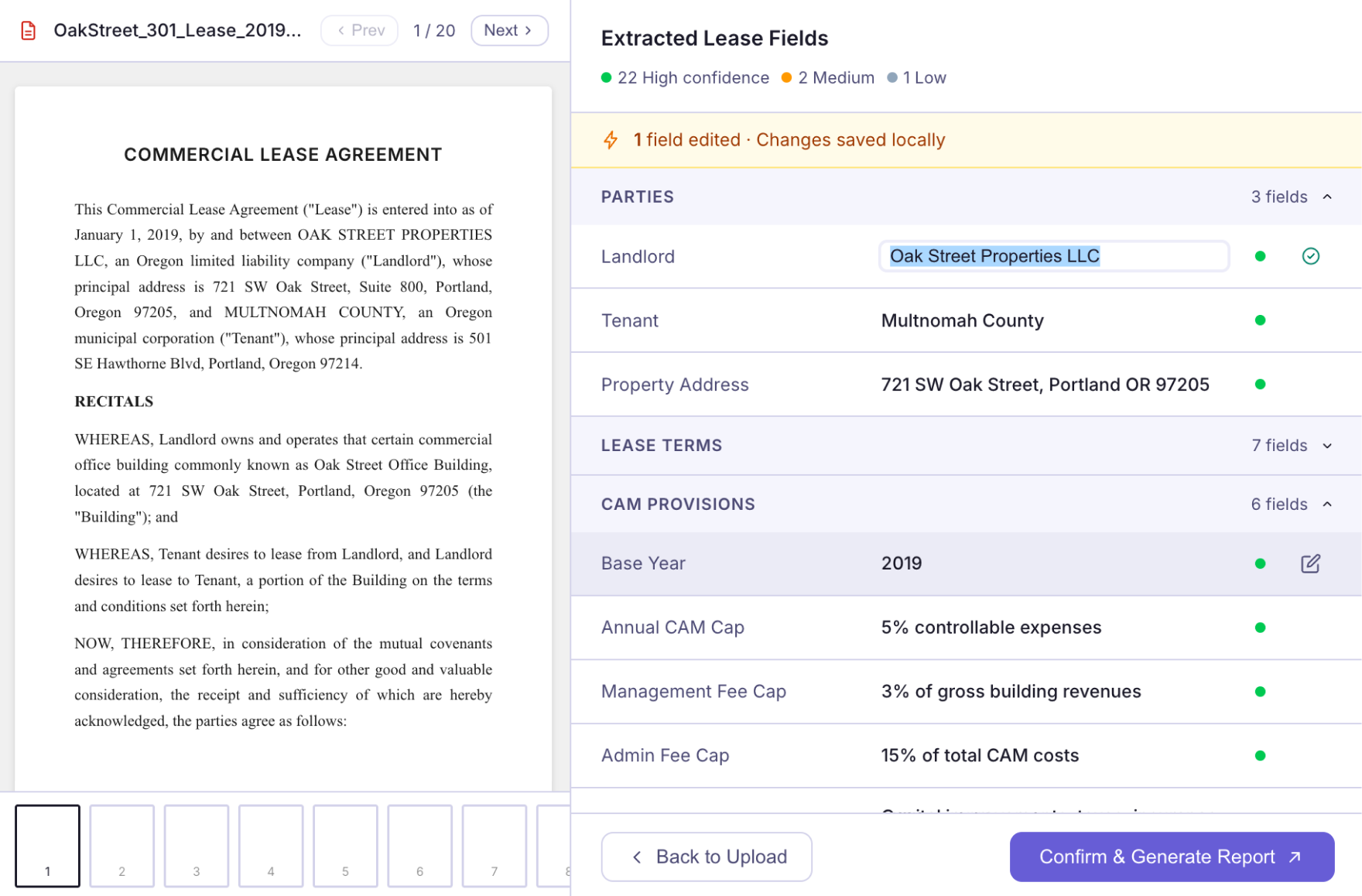
Extracted provisions become enforceable compliance rules specific to each lease. CAM calculation methodology, includable and excludable costs, caps by category — each encoded from the tenant's actual lease language.
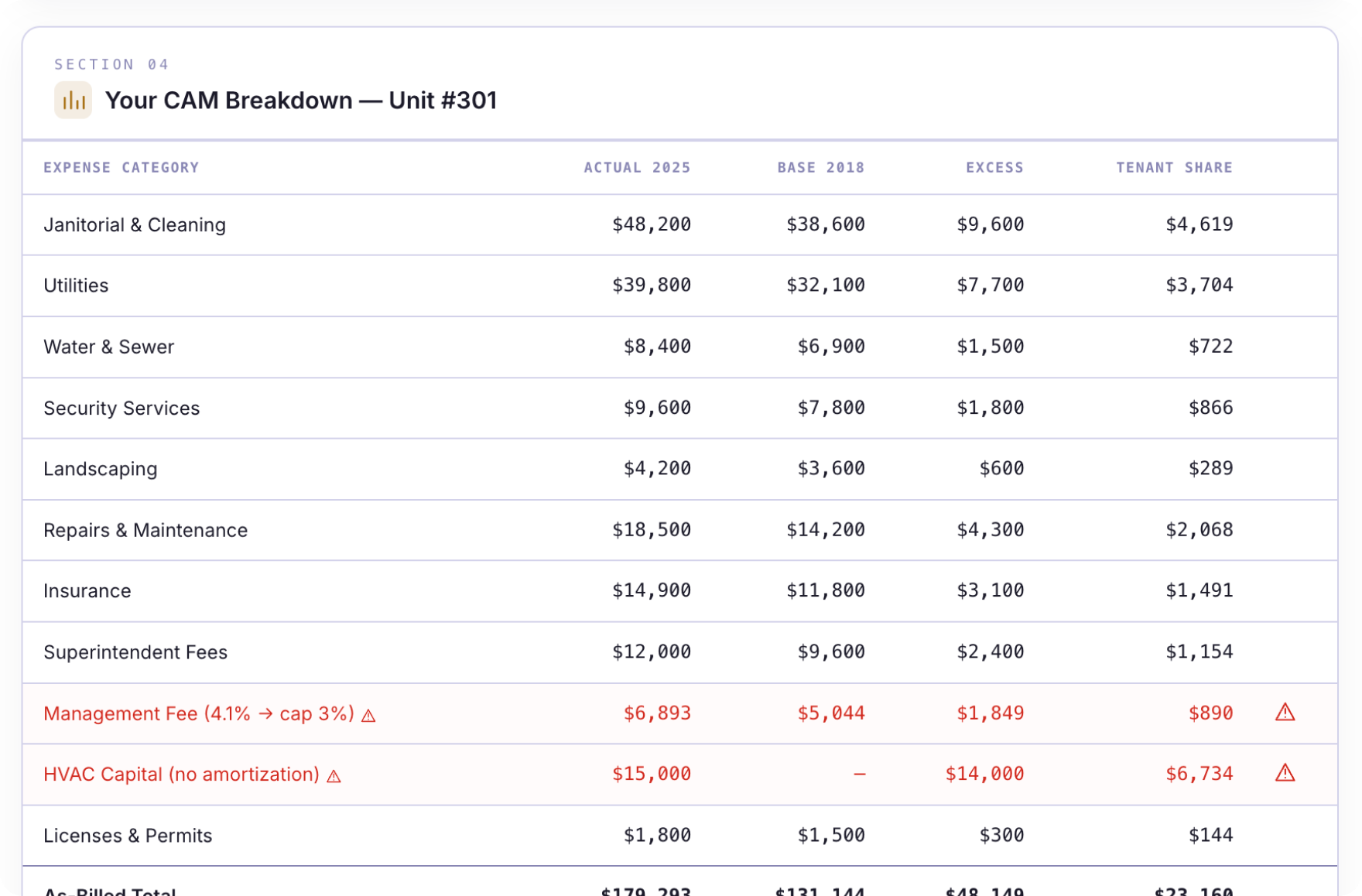
Annual CAM reconciliation statements are checked against the lease-specific rules. LeaseMind flags every charge that exceeds what the lease permits, with the lease provision cited as authority.
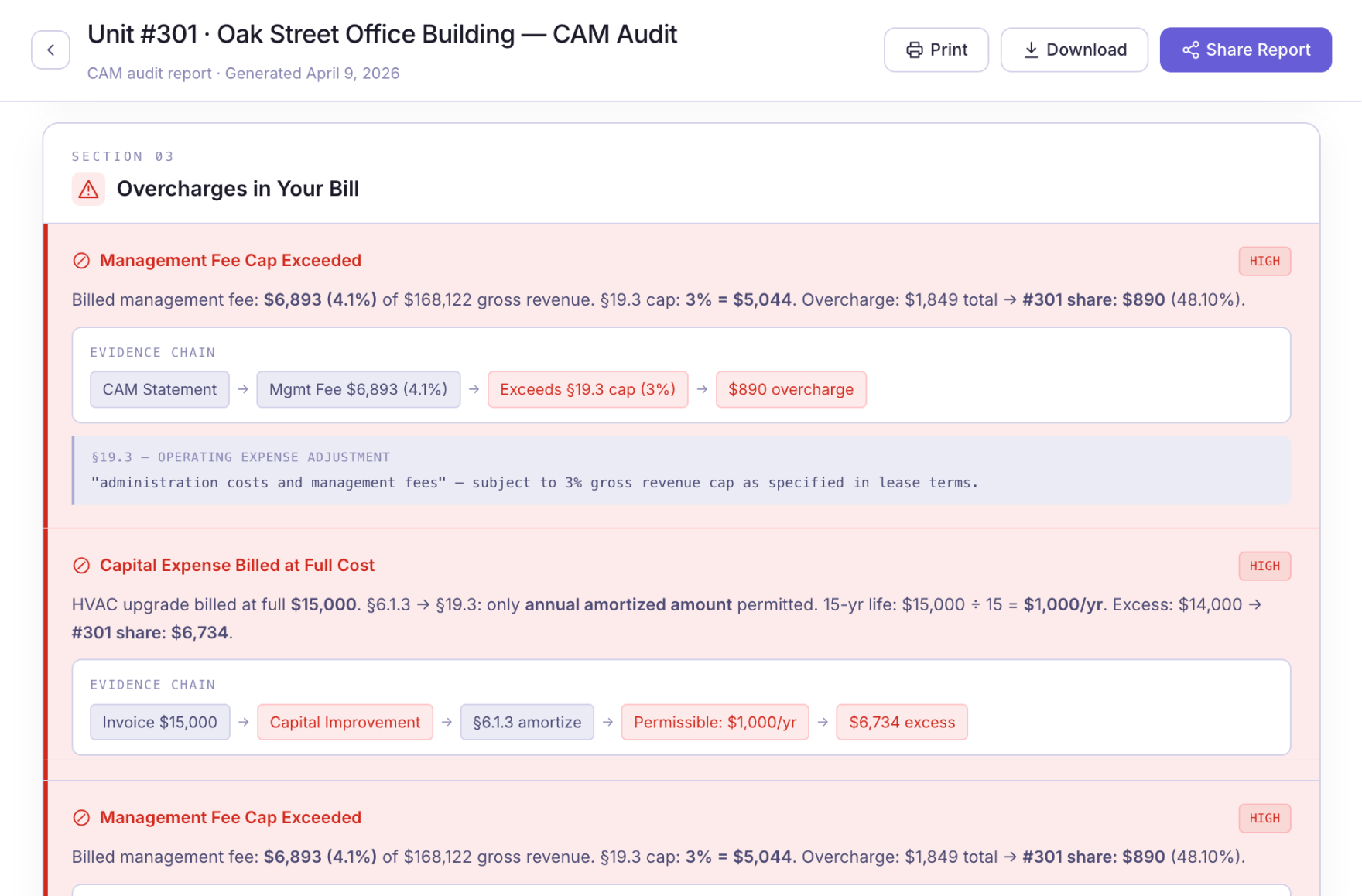
Flagged overcharges are packaged with the dollar amount, the lease provision violated, and a plain-language explanation ready for landlord dispute. Not a spreadsheet — a documented case.
Industry studies find 15-40% of annual CAM reconciliation statements contain billing errors that favor landlords. The reason most go uncorrected: verification requires reading a complex lease and cross-referencing every line item against it. That task doesn't get done at scale.
A multi-location operator with 50 leases receives 50 annual reconciliations. Each requires cross-referencing expenses against lease language. Most go unchecked.
Industry studies show 15-40% of CAM reconciliation statements contain errors that favor landlords. Most tenants never catch them because verification requires reading the lease.
Even organizations that conduct CAM audits do them once — retroactively. Overcharges accumulate across multiple years before discovery. LeaseMind enforces continuously.
FAQ
LeaseMind extracts 50+ provision types including CAM caps (absolute and percentage), base year calculations, gross-up provisions, excluded costs, controllable vs. uncontrollable expense designations, audit rights, CPI adjustments, and permitted use clauses. 90-95% accuracy on standard provisions, 85-90% on complex ones.
Yes. LeaseMind integrates with Yardi, MRI, and other property management platforms via API for reconciliation statement import. Lease PDFs can be uploaded directly or ingested from your document management system.
Recovery varies by lease complexity, landlord, and market. Studies cite $0.30-$2.50 per square foot per year in overcharges on audited properties. For a 20,000 sq ft location, that's $6,000-$50,000 per year that went to the landlord instead of the tenant.
LeaseMind tracks each lease independently. When the same building has multiple tenants with different CAM provisions, each reconciliation is audited against the specific lease that governs that tenant — not a standard template.
Yes. LeaseMind runs on SOC 2 Type II certified infrastructure. Lease documents are encrypted in transit and at rest. Access is role-based and fully audited.